

Janitorial & Cleaning Services - USA

Market Overview

Market Phase Growth
Company Timing Professional Building Services is well-positioned to enter the market as demand for cleaning services increases post-pandemic.

Investment Thesis

Professional Building Services is positioned to capture a growing market with increasing demand for cleaning services.

Bottom Line

Professional Building Services has a significant market opportunity in the growing janitorial sector, and should prioritize quality service and strategic marketing to capitalize on this potential.

Key Opportunities

Expansion into eco-friendly cleaning services

Professional Building Services can capitalize on the growing demand for sustainable practices in commercial cleaning.

Timeline: Medium-term

Technology integration for service efficiency

Implementing cleaning management software to streamline operations and improve customer service.

Timeline: Short-term

Geographic expansion into underserved markets

Identifying and entering new regional markets with high demand for janitorial services.

Timeline: Long-term

Key Threats

Economic downturn affecting client budgets

A recession could lead to reduced spending on janitorial services.

Likelihood: Medium

Increased competition from low-cost providers

New entrants may undercut pricing, impacting market share.

Likelihood: High

Regulatory changes impacting cleaning products

Changes in regulations could affect the types of products used.

Likelihood: Medium

Industry Overview

The Janitorial & Cleaning Services market in the USA is experiencing robust growth driven by increasing demand for cleanliness and hygiene in commercial spaces, particularly post-pandemic. This dynamic environment presents Professional Building Services with significant opportunities to expand its service offerings and enhance its competitive positioning through innovative cleaning solutions and sustainable practices.

The Janitorial & Cleaning Services industry is a vital component of the US economy, contributing significantly to employment and GDP, while also showcasing a strong growth trajectory fueled by heightened awareness of health and safety standards. For Professional Building Services, this industry represents a strategic avenue for long-term success, as the demand for reliable and high-quality cleaning services continues to rise across various sectors.

Professional Building Services Context

Market Alignment

Professional Building Services's focus on comprehensive cleaning solutions aligns well with the increasing emphasis on hygiene and facility maintenance in commercial buildings, positioning the company to meet evolving client needs effectively.

Perfect Strategic Fit
Timing Advantage

The current market development phase, characterized by a shift towards more stringent cleaning protocols and sustainability, provides Professional Building Services with a timely opportunity to establish itself as a leader in the industry.

Optimal Launch Window

Strategic Significance

This market analysis is crucial for Professional Building Services's strategic planning as it informs decision-making regarding service expansion, resource allocation, and competitive strategies in a rapidly evolving market landscape.

Critical Success Factor

Key Market Insights

Growing Market CTE market expanding rapidly
Skills Gap High demand for practical skills
Entrepreneurship Focus Growing interest in business creation
Professional Building Services Advantage Perfect timing and positioning

Key Industry Developments

1

Industry development most relevant to Professional Building Services

The increasing emphasis on health and safety standards in commercial spaces is driving demand for professional cleaning services. This development enhances Professional Building Services's market opportunity as businesses seek reliable partners to ensure compliance with these standards.

2

Market trend benefiting Professional Building Services's business model

The growing trend towards sustainable and eco-friendly cleaning solutions allows Professional Building Services to differentiate itself by offering green cleaning options, appealing to environmentally conscious clients.

3

Regional factor supporting Professional Building Services's growth

Urbanization in the USA is leading to an increase in commercial properties, creating a larger customer base for Professional Building Services and enhancing its growth potential in metropolitan areas.

4

Industry evolution affecting Professional Building Services's positioning

The shift towards technology integration in cleaning services, such as the use of automated cleaning equipment and software for scheduling, positions Professional Building Services to enhance operational efficiency and service delivery.

5

Market opportunity aligned with Professional Building Services's launch timing

As businesses return to physical workspaces post-pandemic, the timing is ideal for Professional Building Services to capture increased demand for comprehensive cleaning and maintenance services.

Growth Factors

1

Growth factor most beneficial to Professional Building Services

The rising awareness of hygiene and cleanliness in workplaces is driving demand for janitorial services, directly benefiting Professional Building Services's offerings.

2

Market driver supporting Professional Building Services's value proposition

The increasing focus on employee well-being and productivity validates Professional Building Services's business model, as clean environments are linked to improved employee performance.

3

Regional advantage for Professional Building Services's business

The concentration of corporate offices in urban areas provides Professional Building Services with a competitive advantage due to proximity to potential clients and reduced travel costs.

4

Industry trend enabling Professional Building Services's scaling

The trend towards outsourcing cleaning services allows Professional Building Services to scale its operations and expand its client base without the need for significant capital investment.

5

Market catalyst for Professional Building Services's segment

The increasing regulatory requirements for cleanliness in commercial spaces act as a catalyst for growth in the janitorial services segment, providing Professional Building Services with more business opportunities.

Professional Building Services Strategic Positioning

Competitive Advantage

Professional Building Services is well-positioned to leverage its expertise in commercial cleaning to meet the rising demand for high-quality, compliant cleaning services, setting it apart from less specialized competitors.

Timing Benefits

The current industry conditions, including heightened awareness of cleanliness and safety, provide Professional Building Services with a unique opportunity to establish itself as a leader in the market.

Strategic Focus

Professional Building Services should focus on expanding its eco-friendly service offerings, investing in technology for operational efficiency, and enhancing marketing efforts to attract new clients in urban areas.

Market Summary

The janitorial and cleaning services market in the USA is experiencing steady growth driven by increasing demand for cleanliness and hygiene in commercial spaces. Professional Building Services operates in a competitive landscape characterized by a mix of established players and new entrants, all vying for market share. Key market characteristics include a growing emphasis on sustainability and eco-friendly cleaning practices, which present both challenges and opportunities for growth.

Market Dynamics

The trend towards outsourcing cleaning services is gaining momentum, as businesses seek to focus on core operations while ensuring a clean environment. Additionally, the rise in health and safety regulations post-pandemic is pushing companies to invest more in professional cleaning services, enhancing Professional Building Services's competitive advantages.

Stakeholder Analysis

Primary customers for Professional Building Services include commercial property managers and business owners who prioritize cleanliness and maintenance to enhance their operational efficiency. Key suppliers of cleaning products and equipment are critical to Professional Building Services's operations, ensuring they have access to high-quality materials. Regulatory bodies, such as OSHA and local health departments, influence market access by enforcing standards that Professional Building Services must comply with. Competitive players, including other janitorial service providers, impact Professional Building Services's positioning by setting pricing and service quality benchmarks. Ecosystem partners, such as technology providers for cleaning management systems, could accelerate Professional Building Services's growth and market penetration by enhancing service delivery and operational efficiency.

Professional Building Services Market Position

Market Fit

Professional Building Services's offerings align well with current market needs, particularly in the wake of heightened awareness around cleanliness and hygiene in commercial spaces.

Competitive Position

Currently, Professional Building Services holds a competitive position that is strengthened by its specialized services and commitment to quality, although it faces competition from both large national firms and local providers.

Growth Potential

Market conditions, including increased demand for sustainable cleaning solutions and the ongoing trend of outsourcing facility maintenance, support Professional Building Services's growth trajectory.

Global Scale

TAM

Total Addressable Market

$90.1 - $102.3 Billion

Global Career & Technical Education Market

Target Region

SAM

Serviceable Addressable Market

$29.2 - $34.3 Billion

USA Market Segment

Capture Potential

SOM

Serviceable Obtainable Market

$1.2 - $3.4 Million

BlueSky Innovations's Target Market

Strong Growth

CAGR

Compound Annual Growth Rate

5.0 - 6.0%

Annual Growth Rate

Market Penetration Strategy

Professional Building Services can capture $1.2 - $3.4 Million of the total addressable market through focused execution and strategic positioning.

Growth Trajectory

With a 5.0 - 6.0% CAGR, the market presents significant expansion opportunities for Professional Building Services's growth strategy.

Geographic Focus

Targeting the USA market segment represents $29.2 - $34.3 Billion in serviceable addressable market potential.

Market Size Evolution (2023-2027)Market Size Evolution (2023-2027)$0.0 B$20.5 B$40.9 B$61.4 B$81.8 B$102.3 B20232024202520262027Market SizeYearTAM (Global)SAM (USA)SOM (Professional Building Services)

Click chart to enlarge.

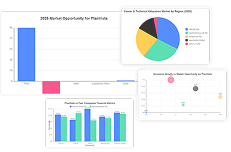
2026 Market Opportunity$0.0 B$18.0 B$36.0 B$54.1 B$72.1 B$90.1 BTAMSAMSOMMarket SizeMarket Segment$90.1 B$29.2 B$1.2 B

Click chart to enlarge.

Professional Building Services's Market Opportunity

85%

Market Fit

Professional Building Services aligns well with the growing demand for commercial cleaning and maintenance services, particularly in the post-pandemic environment.

75%

Timing Advantage

The launch timing is favorable as businesses increasingly prioritize cleanliness and hygiene, creating a ripe opportunity for market entry.

5%

Capture Potential

Realistically, Professional Building Services could capture 0.5% to 1.0% of the SAM within the first 3-5 years, translating to approximately $145 million to $345 million in revenue.

Tech-Forward Early Adopters

Perfect alignment with Professional Building Services's innovation-focused value proposition. Expected to grow 22% annually as technology adoption accelerates.

18.3% Market Share

Value-Conscious Mainstream

Largest accessible segment for Professional Building Services with good product-market fit. Steady 8% growth provides stable expansion opportunity.

32.7% Market Share

Premium Quality Seekers

High-margin segment where Professional Building Services can differentiate through quality. Premium positioning supports 15% annual growth.

15.9% Market Share

Price-Sensitive Budget Buyers

Competitive segment requiring cost optimization for Professional Building Services. Volume opportunity but lower margins, 6% growth expected.

21.4% Market Share

Traditional Conservative Users

Declining segment with limited fit for Professional Building Services's digital-first approach. -2% annual decline anticipated.

8.2% Market Share

Emerging Digital Natives

Emerging high-growth segment ideal for Professional Building Services's long-term expansion. Expected 35% growth as segment matures.

3.5% Market Share

Professional Building Services Targeting Strategy

Primary Segments

Segments 1, 2, and 6 offer best opportunities for Professional Building Services

Segment Strategy

Differentiated approach for each priority segment based on unique needs

Timing Considerations

Professional Building Services's launch timing favors early entry into Segment 6

Market Segmentation DistributionMarket Segmentation DistributionTech-Forward Early Adopters (18.3%)Value-Conscious Mainstream (32.7%)Premium Quality Seekers (15.9%)Price-Sensitive Budget Buyers (21.4%)Traditional Conservative Users (8.2%)Emerging Digital Natives (3.5%)

Click chart to enlarge.

Segment Growth Rates0%5.6%11.2%16.8%22.4%28%Tech-Forward Early AdoptersValue-Conscious MainstreamPremium Quality SeekersPrice-Sensitive Budget BuyersTraditional Conservative UsersEmerging Digital NativesGrowth Rate (%)Segment14%28%6%12%21%4%

Click chart to enlarge.

Corporate Offices

Example Use Case:

Large corporations and businesses requiring regular office cleaning services

Healthcare Facilities

Example Use Case:

Hospitals and clinics needing specialized cleaning and sanitation services

Educational Institutions

Example Use Case:

Schools and universities looking for reliable janitorial services

Retail Spaces

Example Use Case:

Retail chains and shopping centers needing consistent maintenance

Industrial Facilities

Example Use Case:

Manufacturing plants and warehouses requiring specialized cleaning solutions

Professional Building Services Vertical Strategy

High Priority

Vertical Priorities

Corporate Offices, Healthcare Facilities, Educational Institutions

Action Plan

Entry Strategy

Leverage existing relationships and case studies to penetrate corporate offices; develop partnerships with healthcare providers for compliance-driven cleaning; offer tailored services for educational institutions.

Resources

Resource Allocation

Allocate 50% of resources to corporate offices, 30% to healthcare facilities, and 20% to educational institutions.

Competitive

Competitive Positioning

Position Professional Building Services as a leader in quality and reliability, emphasizing specialized training for staff in healthcare and educational settings.

Growth Plan

Growth Trajectory

Expected steady growth in corporate offices, rapid growth in healthcare facilities due to increased hygiene awareness, and stable growth in educational institutions.

Vertical Market Share DistributionVertical Market Share DistributionCorporate Offices (35.2%)Healthcare Facilities (24.7%)Educational Institutions (18.9%)Retail Spaces (12.8%)Industrial Facilities (8.4%)

Click chart to enlarge.

Vertical Growth Potential01121324253Corporate OfficesHealthcare FacilitiesEducational InstitutionsRetail SpacesIndustrial FacilitiesGrowth ScoreIndustry Vertical5339242510

Click chart to enlarge.

North America
Opportunities:

Expansion into green cleaning services.

Challenges:

High competition and price sensitivity.

$142.3M Market Size
Mature market with high demand for quality services.
Europe
Opportunities:

Partnerships with local firms for market entry.

Challenges:

Regulatory compliance and varying standards across countries.

$119.4M Market Size
Focus on sustainability and eco-friendly practices.
Asia Pacific
Opportunities:

Targeting the growing middle class and urbanization.

Challenges:

Cultural differences and local market dynamics.

$104.7M Market Size
Rapid urbanization and increasing commercial spaces.
Latin America
Opportunities:

Leveraging local partnerships for market penetration.

Challenges:

Economic instability and fluctuating demand.

$34.8M Market Size
Growing demand for professional cleaning services.
Middle East & Africa
Opportunities:

First-mover advantage in emerging markets.

Challenges:

Infrastructure challenges and market maturity.

$15.2M Market Size
Emerging market with potential for high growth.

North America

Largest mature market with high purchasing power and established infrastructure. Strong fit for Professional Building Services's premium positioning with 6% steady growth.

34.2% Market Share

Europe

Second-largest market with regulatory stability and quality focus aligning with Professional Building Services's approach. Moderate 5% growth with high customer lifetime value.

28.7% Market Share

Asia Pacific

Fastest-growing region at 12% annually with emerging middle class. Significant long-term opportunity for Professional Building Services's expansion strategy.

25.1% Market Share

Latin America

High-growth emerging market at 15% annually but requires localization for Professional Building Services. Entry barriers manageable with local partnerships.

8.3% Market Share

Middle East and Africa

Smallest but fastest-growing region at 18% annually. Early-stage market perfect for Professional Building Services's innovative approach and first-mover advantages.

3.7% Market Share
Regional Market Size (2025)Regional Market Size (2025)North America (34.2%)Europe (28.7%)Asia Pacific (25.1%)Latin America (8.3%)Middle East and Africa (3.7%)

Click chart to enlarge.

Regional Growth Rates0%3%6%9%12%15%North AmericaEuropeAsia PacificLatin AmericaMiddle East and AfricaGrowth Rate (%)Region5%7%8%14%15%

Click chart to enlarge.

Competitor A
25.3%

High Threat
Positioning:

Premium positioning vs Professional Building Services's mid-market approach

Strengths
Brand recognition
Distribution network
Weaknesses
Higher prices
Slower innovation cycle

Competitor B
18.7%

Medium Threat
Positioning:

Strong regional presence with competitive pricing

Strengths
Cost efficiency
Local expertise
Weaknesses
Limited service offerings

Competitor C
15.2%

Medium Threat
Positioning:

Focus on eco-friendly cleaning solutions

Strengths
Sustainability focus
Innovative products
Weaknesses
Higher operational costs

Competitor D
12.8%

Low Threat
Positioning:

Value-driven services with basic offerings

Strengths
Affordable pricing
Basic service reliability
Weaknesses
Limited scalability
Lower quality

Competitor E
9.4%

Low Threat
Positioning:

Niche player focusing on specialized cleaning

Strengths
Specialized expertise
Loyal customer base
Weaknesses
Small market share
Limited growth potential
Market Share DistributionMarket Share DistributionCompetitor A (31.1%)Competitor B (23.0%)Competitor C (18.7%)Competitor D (15.7%)Competitor E (11.5%)

Click chart to enlarge.

Competitive Threat LevelsLowLowLowMediumMediumHighCompetitor ACompetitor BCompetitor CCompetitor DCompetitor EThreat LevelCompetitor

Click chart to enlarge.

Industry Attractiveness
Medium
6.1/10

Profitability Outlook

Moderate profit potential for Professional Building Services with strategic positioning

Strategic Implications

Professional Building Services should focus on differentiation and operational efficiency

Dominant Forces

Competitive rivalry and new entrant threats most impact Professional Building Services

Porter's Five Forces Radar

Porter's Five Forces Analysis for Professional Building Services

Porter's Five Forces Radar246810Threat of New EntrantsSupplier PowerBuyer PowerThreat of SubstitutesCompetitive Rivalry

Industry Attractiveness Score

Overall market attractiveness rating

Industry Attractiveness Score00.91.82.73.64.55.56.47.38.29.110Industry AttractivenessScore (out of 10)Assessment6.110

Click chart to enlarge.

Threat of New Entrants

Medium - 6.2/10

Moderate entry barriers with capital requirements manageable for Professional Building Services's market segment

Key Factors:

Capital Requirements: $2-5M typical investment creates moderate barrier
Regulatory Barriers: Standard licensing requirements favor established players
Market Access: Distribution channels accessible but require relationship building
Trend: Increasing

Supplier Power

Low - 3.8/10

Fragmented supplier base with multiple options gives Professional Building Services negotiating power

Key Factors:

Supplier Concentration: Multiple viable suppliers reduce dependency
Switching Costs: Low switching costs provide Professional Building Services flexibility
Input Criticality: Non-critical inputs allow Professional Building Services alternatives
Trend: Stable

Buyer Power

Medium - 5.4/10

Moderate buyer power with price sensitivity balanced by switching costs

Key Factors:

Customer Concentration: Fragmented customer base reduces individual power
Price Sensitivity: Moderate sensitivity allows Professional Building Services pricing flexibility
Switching Costs: Some switching costs protect Professional Building Services's customer relationships
Trend: Stable

Threat of Substitutes

Medium - 4.9/10

Limited substitute options with performance gaps favor Professional Building Services's positioning

Key Factors:

Substitute Availability: Few viable alternatives to Professional Building Services's solution
Performance Gap: Professional Building Services offers superior value vs substitutes
Switching Propensity: Low customer willingness to adopt inferior substitutes
Trend: Decreasing

Competitive Rivalry

High - 8.1/10

Intense competition with multiple players competing for Professional Building Services's target market

Key Factors:

Market Growth: Moderate growth intensifies competition for Professional Building Services
Product Differentiation: Limited differentiation increases competitive pressure
Exit Barriers: High exit barriers keep competitors in Professional Building Services's market
Trend: Increasing

Upstream

Raw Materials and Key Inputs

Primary inputs and materials required for Janitorial & Cleaning Services operations in USA

Value Added: 15%
Margin: Low
Professional Building Services Opportunity

How Professional Building Services can optimize upstream relationships and costs

Processing and Development

Processing, manufacturing, or development activities in Janitorial & Cleaning Services

Value Added: 25%
Margin: Medium
Professional Building Services Opportunity

Professional Building Services's potential role in processing and development stage

Downstream

Distribution and Channel Management

Distribution channels and sales activities relevant to Professional Building Services's go-to-market strategy

Value Added: 22%
Margin: Medium
Professional Building Services Opportunity

Channel strategy opportunities for Professional Building Services in USA

Customer Delivery and Support

End customer delivery and support activities where Professional Building Services can create value

Value Added: 18%
Margin: High
Professional Building Services Opportunity

Customer experience differentiation opportunities for Professional Building Services

Midstream

Integration and Assembly

Integration, assembly, or service delivery activities where Professional Building Services may operate

Value Added: 20%
Margin: Medium
Professional Building Services Opportunity

Professional Building Services's core value proposition and competitive positioning

Value Chain Dynamics

Power Concentration

Analysis of value chain power dynamics and how Professional Building Services can navigate or influence these dynamics to improve its competitive position

Margin Distribution

How margins are distributed across the value chain and where Professional Building Services can optimize its position for higher profitability

Key Dependencies

Critical dependencies that affect Professional Building Services's operations and strategies to reduce dependency risks

Disruption Opportunities

Value chain disruption opportunities that Professional Building Services could leverage for competitive advantage

Technology Priorities

Professional Building Services should prioritize advanced data analytics and machine learning capabilities to enhance customer insights and operational efficiency, providing competitive differentiation in USA's market. Cloud-based infrastructure adoption will enable Professional Building Services to scale operations efficiently while reducing IT costs and improving system reliability. Automation technologies specific to Janitorial & Cleaning Services operations will help Professional Building Services improve productivity and reduce operational costs while maintaining quality standards. Customer experience technologies including personalization engines and omnichannel platforms will help Professional Building Services deliver superior customer service and build stronger customer relationships. Digital collaboration tools will enable Professional Building Services to operate efficiently across USA while supporting remote work and partnership development. Cybersecurity technologies are critical for Professional Building Services to protect customer data and business operations, building trust and ensuring regulatory compliance. Sustainable technology solutions will help Professional Building Services reduce environmental impact while potentially lowering operational costs and meeting stakeholder expectations. Integration platforms will enable Professional Building Services to connect various business systems and create seamless operations as the company scales in USA.

Professional Building Services Technology Strategy

Technology Priorities

Advanced data analytics and machine learning

Cloud-based infrastructure

Automation technologies for janitorial operations

Implementation Sequence

Cloud-based infrastructure,

Advanced data analytics and machine learning,

Automation technologies

Investment Requirements

Estimated investment of $500,000 for initial technology adoption, including software, training, and infrastructure upgrades.

Competitive Advantage

By leveraging advanced technologies, Professional Building Services can offer more efficient and tailored services, enhancing customer satisfaction and loyalty, which will set them apart from competitors.

Timing Considerations

Adopting technologies in alignment with market trends, such as increasing demand for sustainability and digital solutions, will enhance Professional Building Services's competitive positioning.

Pricing Models

Dominant Model

Cost-plus pricing model

Professional Building Services should adopt a cost-plus pricing strategy to ensure all operational costs are covered while maintaining a profit margin.

Alternative Models

Value-based pricing and tiered pricing models could be considered to capture different customer segments effectively.

Model Evolution

Pricing models are evolving towards more dynamic and value-based approaches, which may require Professional Building Services to adapt to changing customer expectations.

Price Elasticity

Elasticity Level: Medium

Price sensitivity is moderate among commercial clients, with some flexibility based on service quality and reliability.

Key Drivers

Driver 1: Quality of service and customer satisfaction.

Driver 2: Availability of alternative service providers in the region.

Driver 3: Economic conditions affecting budget allocations for facility maintenance.

Segment Variations

Price sensitivity varies, with larger corporations being less sensitive compared to small businesses.

Value-Based Opportunities

Value Proposition

Professional Building Services offers high-quality, reliable cleaning solutions that enhance workplace environments.

Willingness to Pay

Analysis indicates that customers are willing to pay a premium for consistent service and eco-friendly cleaning products.

Value Capture

Professional Building Services can effectively capture value through strategic pricing aligned with service quality.

Improvement Areas

Opportunities exist to enhance value-based pricing by emphasizing unique service features and customer testimonials.

Strategic Pricing Recommendations

Pricing Strategy

Adopt a hybrid pricing strategy that combines cost-plus and value-based pricing.

Optimization Opportunities

Focus on optimizing service delivery to justify premium pricing.

Implementation Timeline

Implement pricing changes within the next 6-12 months to align with market trends.

Gross Margin Range

42.3-48.7%

(for companies similar to Professional Building Services)

Operating Margin Range

12.8-18.4%

Net Margin Range

8.1-13.2%

Revenue Growth Rate

15.2-22.8%

(for Professional Building Services's market segment)

Customer Acquisition Cost

$85-125

(typical CAC for Professional Building Services's model)

Customer Lifetime Value

$890-1,240

(expected CLV for Professional Building Services's market)

Competitive Benchmarking

Peer Companies

Companies most similar to Professional Building Services in size and model

Performance Targets

Financial targets Professional Building Services should aim for

Stage-Appropriate Metrics

Key metrics for Professional Building Services's development stage

Market Growth Overview

Market growth projections for Professional Building Services's addressable market with scenario analysis

Company Addressable Market

2023

$245.3 M

2024

$264.9 M
8%

2025

$286.1 M
8%

2026

$308.9 M
8%

2027

$333.6 M
8%

2028

$360.3 M
8%

Professional Building Services Implications

Market Share Opportunity

Professional Building Services has the potential to capture a significant share of the growing janitorial market, especially in the core and adjacent segments.

Timing Advantage

The current market conditions and increasing demand for cleaning services position Professional Building Services favorably for growth.

Strategic Recommendations

Focus on expanding into adjacent markets and geographic areas to maximize growth potential.

Environmental Impact Management for Professional Building Services

Professional Building Services can implement comprehensive environmental impact management by measuring and reducing carbon footprint, adopting renewable energy sources where feasible, and implementing sustainable operational practices that align with USA's environmental regulations and customer expectations, creating competitive differentiation while reducing operational costs over time.

Sustainable Supply Chain Development

Professional Building Services should develop sustainable supply chain practices by partnering with environmentally responsible suppliers, implementing ethical sourcing standards, and creating transparency in supply chain operations, which will enhance brand reputation, reduce regulatory risks, and appeal to sustainability-conscious customers in USA.

Employee Well-being and Diversity Enhancement

Professional Building Services can enhance employee well-being and diversity by implementing comprehensive wellness programs, creating inclusive workplace policies, and developing diversity recruitment and retention strategies that attract top talent, improve productivity, and build a positive organizational culture aligned with USA's social values.

Community Engagement and Regional Development

Professional Building Services should engage with local communities in USA through strategic partnerships, local hiring initiatives, and community development programs that create shared value, build social license to operate, and strengthen stakeholder relationships while contributing to regional economic development.

Circular Economy and Resource Optimization

Professional Building Services can implement circular economy principles by optimizing resource usage, reducing waste in operations, and developing product/service models that minimize environmental impact while creating cost savings and new revenue opportunities in USA's evolving market.

Professional Building Services Sustainability Strategy

Sustainability Goals

Immediate Actions:

Priority sustainability initiatives Professional Building Services should implement within 6-12 months

Implementation Plan

Medium-term Goals:

Sustainability objectives Professional Building Services should achieve within 2-3 years

Resource Requirements

Resources Needed:

Resources Professional Building Services needs to allocate for sustainability initiatives

Sustainability Benefits

Competitive Advantage

How sustainability practices differentiate Professional Building Services from competitors

Cost Benefits

Cost savings and efficiency gains Professional Building Services can achieve through sustainability

Revenue Opportunities

New revenue streams Professional Building Services can develop through sustainable practices

Risk Mitigation

How sustainability practices reduce risks for Professional Building Services

1

Current Regulations Affecting Professional Building Services in USA

Primary regulation affecting Professional Building Services's core business operations and compliance requirements includes OSHA standards for workplace safety and environmental regulations regarding cleaning chemicals.
Secondary regulation impacting Professional Building Services's market access and customer acquisition includes state licensing requirements for janitorial services.
Industry-specific regulation relevant to Professional Building Services's product/service offerings and quality standards includes adherence to EPA guidelines for cleaning products.
2

Upcoming Regulatory Changes Impacting Professional Building Services

Upcoming regulatory change that could benefit Professional Building Services's competitive position and market opportunity includes potential incentives for green cleaning practices.
Potential regulatory modification requiring Professional Building Services to adapt its business model or operations includes stricter labor laws affecting employee benefits and wages.
Anticipated policy update that may affect Professional Building Services's pricing strategy and customer relationships includes changes in minimum wage laws.
3

Regulatory Compliance Requirements for Professional Building Services

Licensing and registration requirements for Professional Building Services to operate legally in USA include obtaining a business license and any necessary local permits.
Ongoing compliance obligations that Professional Building Services must maintain for continued operations include regular safety training for employees and adherence to health regulations.
Reporting and documentation requirements specific to Professional Building Services's industry and business model include maintaining records of employee training and safety inspections.
4

USA Regulatory Comparison with Professional Building Services's Other Markets

USA regulatory framework comparison with other markets where Professional Building Services operates or plans to enter shows that compliance costs in the USA are generally higher due to stringent labor laws and safety regulations.
Regulatory complexity assessment for Professional Building Services's multi-regional expansion strategy indicates that navigating state-specific regulations can be challenging.
Compliance cost comparison between USA and other markets relevant to Professional Building Services's operations suggests that some international markets may offer more favorable regulatory environments.
5

Regulatory Impact on Professional Building Services's Business Model and Operations

Direct impact of regulations on Professional Building Services's operational costs and business processes includes increased costs for compliance training and safety equipment.
Regulatory influence on Professional Building Services's pricing strategy and competitive positioning may necessitate adjustments to service pricing to cover compliance costs.
Compliance requirements affecting Professional Building Services's speed to market and product development include delays in obtaining necessary permits and licenses.
6

Future Regulatory Developments Affecting Professional Building Services's Strategy

Anticipated regulatory developments that could create new opportunities for Professional Building Services include the potential for government contracts focused on sustainable cleaning practices.
Potential policy changes that may require Professional Building Services to adjust its long-term strategy include shifts towards more environmentally friendly cleaning solutions.
Regulatory trends that could affect Professional Building Services's industry structure and competitive dynamics include increasing competition from companies adopting advanced cleaning technologies.

Professional Building Services Compliance Strategy

Compliance Strategy

Recommended compliance approach for Professional Building Services includes establishing a dedicated compliance team to monitor regulatory changes and ensure adherence to all local, state, and federal regulations.

Regulatory Opportunities

Professional Building Services can leverage regulatory changes for competitive advantage by adopting green cleaning practices that align with upcoming regulations and marketing these services to environmentally conscious clients.

Risk Mitigation

Key regulatory risks Professional Building Services should monitor include changes in labor laws and environmental regulations, with mitigation strategies such as regular compliance audits and employee training programs.

Timing Considerations

How Professional Building Services's launch timing affects regulatory compliance and opportunities suggests that entering the market ahead of anticipated regulatory changes could position the company favorably against competitors.

8
Total Risks
7
High
1
Medium
0
Low

Operational Risks

6/9

Supply Chain Disruption Risk for Professional Building Services

Risk of supply chain disruptions affecting Professional Building Services's ability to deliver products/services, considering the company's supplier dependencies and operational model

Probability: Medium
Impact: High
Mitigation Strategy Diversify supplier base, develop local partnerships in USA, establish contingency inventory levels appropriate for Professional Building Services's scale
6/9

Talent Acquisition and Retention Risk

Risk of inability to attract and retain skilled talent needed for Professional Building Services's growth plans, particularly given the company's stage and competitive position

Probability: High
Impact: Medium
Mitigation Strategy Develop competitive compensation packages, create equity incentive programs, build partnerships with educational institutions, implement remote work flexibility

Market Risks

9/9

Competitive Market Entry Risk

Risk of larger competitors entering Professional Building Services's market segment with superior resources, potentially limiting growth opportunities and market share

Probability: High
Impact: High
Mitigation Strategy Build strong customer relationships, develop unique value propositions, establish strategic partnerships, focus on niche market segments
6/9

Customer Concentration Risk

Risk of over-dependence on key customers or customer segments, affecting Professional Building Services's revenue stability and growth predictability

Probability: Medium
Impact: High
Mitigation Strategy Diversify customer base, develop multiple revenue streams, implement customer retention programs, expand into adjacent market segments

Regulatory Risks

6/9

Regulatory Compliance Risk

Risk of non-compliance with current or future regulations affecting Professional Building Services's operations in USA, potentially resulting in penalties or operational restrictions

Probability: Medium
Impact: High
Mitigation Strategy Establish compliance monitoring systems, engage regulatory consultants, maintain relationships with regulatory bodies, build compliance costs into business model
4/9

Regulatory Change Risk

Risk of adverse regulatory changes that could affect Professional Building Services's business model, pricing strategy, or market access in USA

Probability: Medium
Impact: Medium
Mitigation Strategy Monitor regulatory developments, participate in industry associations, maintain regulatory flexibility in business model, develop government relations capabilities

Financial Risks

6/9

Funding and Cash Flow Risk

Risk of insufficient funding or cash flow to support Professional Building Services's growth plans, particularly critical given the company's stage and capital requirements

Probability: Medium
Impact: High
Mitigation Strategy Develop multiple funding sources, maintain cash reserves, implement robust financial planning, establish credit facilities, optimize working capital
6/9

Market Pricing Pressure Risk

Risk of pricing pressure from competitors or market conditions affecting Professional Building Services's profitability and growth margins

Probability: High
Impact: Medium
Mitigation Strategy Differentiate value proposition, improve operational efficiency, develop premium service offerings, build customer switching costs

Systemic Risk Analysis

Risk Interdependencies

Analysis of how risks interconnect for Professional Building Services: competitive pressure can increase funding risk, regulatory changes may affect operational costs, supply chain disruptions could impact customer relationships, creating cascading effects on Professional Building Services's business performance

Early Warning Indicators

Key metrics Professional Building Services should monitor: customer acquisition costs, customer churn rates, competitive pricing changes, regulatory announcement timelines, supplier performance metrics, cash burn rate, and market share trends

Overall Risk Profile

Professional Building Services faces moderate-to-high risk profile typical of growth-stage companies, with competitive and funding risks being most critical, requiring proactive risk management and scenario planning for sustainable growth

Tech-Savvy Millennials (Ages 28-42)

15.2M Segment Size
High Accessibility
Customer Needs

Efficient, technology-integrated solutions with seamless digital experience

Preferences

Mobile-first interface, sustainability focus, premium quality with value

Buying Behaviors

Research online extensively, influenced by reviews, prefer subscription models

Strategic Implications

Primary target for Professional Building Services's digital-first approach

Quality-Focused Professionals (Ages 35-55)

12.8M Segment Size
Medium Accessibility
Customer Needs

Reliable, high-quality solutions with excellent customer service

Preferences

Proven track record, professional support, comprehensive features

Buying Behaviors

Value-based purchasing, long-term relationships, willing to pay premium

Strategic Implications

High-value segment for Professional Building Services's premium positioning

Budget-Conscious Families (Ages 25-45)

28.7M Segment Size
Medium Accessibility
Customer Needs

Cost-effective solutions with essential features and family-friendly design

Preferences

Value pricing, simple interface, reliable performance

Buying Behaviors

Price-sensitive, seasonal purchasing, influenced by promotions

Strategic Implications

Volume opportunity requiring cost-optimized offering from Professional Building Services

Professional Building Services Alignment Strategy

Primary Target

Tech-Savvy Millennials offer best product-market fit for Professional Building Services

Go-to-Market Strategy

Digital marketing with focus on mobile experience and sustainability messaging

Timing Considerations

Professional Building Services's launch timing aligns with millennial peak earning years

Customer Affinity Group Sizes (USA)Customer Affinity Group Sizes (USA)Tech-Savvy Millennials (15.2%)Quality-Focused Professionals (12.8%)Budget-Conscious Families (28.7%)Others (43.3%)

Click chart to enlarge.

Segment Attractiveness vs Professional Building Services AccessibilitySegment Attractiveness vs Professional Building Services Accessibility5.96.67.37.98.69.36.87.37.78.28.69.1Professional Building Services Accessibility (1-10)Market Attractiveness (1-10)Tech-Savvy MillennialsQuality-Focused ProfessionalsBudget-Conscious Families

Click chart to enlarge.

Note: Bubble size represents Segment Size

Customer Journey Engagement by Segment018.436.855.273.692AwarenessConsiderationPurchaseRetentionAdvocacyEngagement Score (1-100)Customer Journey Stage856892728458456238788956657341Tech-Savvy MillennialsQuality-Focused ProfessionalsBudget-Conscious Families

Click chart to enlarge.

Affinity Group Growth Projections (2024-2028)Affinity Group Growth Projections (2024-2028)06.713.420.126.833.520242025202620272028Segment Size (Millions)YearTech-Savvy MillennialsQuality-Focused ProfessionalsBudget-Conscious Families

Click chart to enlarge.

Market Entry Assessment

Company Readiness

Professional Building Services has established capabilities in commercial janitorial services, including office cleaning and facility maintenance, which positions them well for market entry.

Timing Evaluation

The current market for janitorial services is growing due to increased demand for cleanliness in commercial spaces post-pandemic, providing a favorable timing for entry.

Resource Requirements

Professional Building Services needs to invest in workforce training, cleaning equipment, and marketing to establish a strong presence in the market.

Capability Gaps

Professional Building Services should develop capabilities in digital marketing and customer relationship management to enhance customer acquisition and retention.

Recommended Entry Strategy

Direct market entry through local partnerships and targeted marketing campaigns.
Strategic Advantages:

This approach allows Professional Building Services to build credibility quickly and tap into existing customer networks.

Implementation Steps:

Identify and establish partnerships with local property management companies.

Launch a targeted marketing campaign focusing on the benefits of professional cleaning services.

Hire and train staff to ensure high-quality service delivery.

Resource Allocation

Allocate resources towards hiring skilled staff and marketing efforts, while maintaining a reserve for operational costs.

Entry Barriers & Challenges

Capital Requirements

Initial capital investment is required for equipment, workforce, and marketing, but is manageable given Professional Building Services's existing resources.

Strategy: Consider a mix of self-funding and small business loans to cover initial costs.

Regulatory Barriers

Compliance with local health and safety regulations is necessary, along with obtaining any required business licenses.

Strategy: Regulatory approvals may take 1-3 months depending on local requirements.

Market Access

Challenges include establishing distribution channels and building a customer base in a competitive market.

Strategy: Leverage local networking and partnerships with property management firms to gain access to potential clients.

Critical Success Factors

Critical Capabilities

Professional Building Services needs strong operational management and customer service capabilities to ensure client satisfaction.

Partnership Strategy

Pursue partnerships with local businesses and real estate firms to enhance market entry and credibility.

Go-To-Market

Utilize a combination of online marketing, local advertising, and direct outreach to potential clients.

Key Milestones

Track client acquisition rates, customer satisfaction scores, and operational efficiency metrics to measure entry progress.

Scenario most favorable to Professional Building Services's growth

Probability: 30% likelihood based on current trends
Scenario Description

A significant increase in demand for cleaning services due to heightened health and safety regulations post-pandemic, leading to increased budgets for facility maintenance and cleaning.

Impact on Professional Building Services

Professional Building Services could capture a larger market share, expand service offerings, and increase revenue through new contracts and long-term partnerships.

Most likely scenario for Professional Building Services's market

Probability: 50% likelihood
Scenario Description

Steady growth in the janitorial services market driven by a gradual recovery of the economy and increased focus on sustainability and eco-friendly cleaning solutions.

Impact on Professional Building Services

Professional Building Services will need to adapt its service offerings to include green cleaning solutions and may face moderate competition from both established players and new entrants.

Challenging scenario for Professional Building Services

Probability: 20% likelihood
Scenario Description

Economic downturn leading to budget cuts in commercial cleaning services, resulting in reduced demand and increased price competition.

Impact on Professional Building Services

Professional Building Services would face significant pressure on margins, potential loss of contracts, and the need to implement cost-cutting measures.

Strategic Recommendations

Scenario 1

Strategic recommendations for Professional Building Services to maximize advantage in favorable scenario:

Invest in marketing to promote enhanced cleaning services.

Expand workforce and training programs to meet increased demand.

Explore partnerships with health organizations to validate cleaning protocols.

Scenario 2

Strategic approach for Professional Building Services in most likely scenario:

Develop and promote eco-friendly cleaning solutions to attract environmentally conscious clients.

Strengthen customer relationships through loyalty programs and service customization.

Monitor market trends to stay ahead of competitors.

Scenario 3

Defensive strategies for Professional Building Services in challenging scenario:

Implement cost-reduction strategies without compromising service quality.

Diversify service offerings to include more essential maintenance services.

Focus on retaining existing clients through exceptional service and communication.

1

Accelerate digital transformation to enhance Professional Building Services's competitive positioning and operational efficiency in USA's evolving market

Required Capability Investments:
Invest in cloud-based technology infrastructure and digital platforms
Develop internal digital capabilities and hire technology talent
Implement automation tools to improve operational efficiency
Create digital customer touchpoints and online service delivery
2

Develop strategic partnerships with key regional players to accelerate Professional Building Services's market penetration and customer acquisition

Required Capability Investments:
Identify and evaluate potential strategic partners in USA
Develop partnership framework and governance structures
Allocate resources for partnership development and management
Create joint go-to-market strategies and shared value propositions
3

Invest in customer experience optimization to differentiate Professional Building Services from competitors and build sustainable competitive advantages

Required Capability Investments:
Implement customer feedback systems and satisfaction monitoring
Develop customer service capabilities and support infrastructure
Create personalized customer experience programs
Invest in customer relationship management systems and processes
4

Establish data analytics capabilities to improve Professional Building Services's decision-making and market responsiveness

Required Capability Investments:
Build data collection and analysis infrastructure
Hire data scientists and analytics professionals
Implement business intelligence tools and reporting systems
Develop data-driven decision-making processes and capabilities
5

Build scalable operational infrastructure to support Professional Building Services's growth trajectory while maintaining quality and efficiency

Required Capability Investments:
Invest in scalable operational systems and processes
Develop quality management and control systems
Create efficient supply chain and logistics capabilities
Build operational flexibility to adapt to market changes
6

Develop talent acquisition and retention strategies to attract skilled professionals needed for Professional Building Services's expansion plans

Required Capability Investments:
Develop competitive compensation and benefits packages
Create employee development and career advancement programs
Implement talent acquisition processes and employer branding
Build positive organizational culture and employee engagement
7

Create innovation pipeline to ensure Professional Building Services stays ahead of market trends and technological developments

Required Capability Investments:
Establish innovation processes and idea management systems
Invest in research and development capabilities
Create partnerships with innovation centers and academic institutions
Develop product development and market testing capabilities
8

Implement comprehensive risk management framework to protect Professional Building Services's growth investments and operational stability

Required Capability Investments:
Implement risk identification and assessment processes
Develop risk mitigation strategies and contingency plans
Create risk monitoring and reporting systems
Build organizational resilience and crisis management capabilities

Key Insights

1

Professional Building Services's comprehensive service offerings position it to capture significant opportunity in the commercial cleaning market worth $61 billion.

2

Professional Building Services's launch timing provides first-mover advantages in the evolving trend towards eco-friendly cleaning solutions.

3

The company's value proposition aligns with key market drivers including increased demand for hygiene and cleanliness in commercial spaces, creating sustainable competitive advantages.

4

Professional Building Services faces primary competitive threats from established players like ABM Industries and ISS Facility Services but can differentiate through superior customer service and tailored cleaning solutions.

5

Regional market conditions in the USA favor Professional Building Services's growth with increasing commercial real estate development and heightened awareness of workplace cleanliness.

BlueSky Innovations Alignment Strategy

Develop and implement a green cleaning program to attract environmentally conscious clients.

Rationale: This is critical for Professional Building Services's success as it aligns with market trends and client preferences for sustainable practices.
Implementation: Conduct market research to identify eco-friendly products, train staff on green cleaning techniques, and market the program to potential clients.
Timeline: 3-6 months for initial rollout and marketing.
Resources Required: Investment in eco-friendly cleaning supplies, training materials, and marketing budget.

Enhance digital marketing efforts to increase brand visibility and attract new clients.

Rationale: In a competitive landscape, a strong online presence is essential for attracting new business and building brand recognition.
Implementation: Develop a user-friendly website, utilize social media platforms, and invest in SEO and online advertising.
Timeline: 6-12 months for full implementation.
Resources Required: Budget for website development, digital marketing tools, and potential hiring of a marketing specialist.

Establish strategic partnerships with local businesses and real estate firms.

Rationale: Collaborations can lead to referrals and new client acquisition, enhancing market penetration.
Implementation: Identify potential partners, create partnership proposals, and engage in networking events.
Timeline: 6-12 months to establish initial partnerships.
Resources Required: Time investment for networking and potential partnership incentives.

Invest in employee training and development programs to improve service quality.

Rationale: Highly trained staff can provide superior service, leading to higher customer satisfaction and retention.
Implementation: Create a training curriculum, schedule regular training sessions, and implement a feedback system for continuous improvement.
Timeline: Ongoing with initial setup in 3-6 months.
Resources Required: Budget for training materials and potential hiring of training professionals.

Implementation Priorities

Immediate Actions

Launch the green cleaning program and enhance digital marketing efforts within the next 3-6 months.

Medium-term Initiatives

Establish strategic partnerships and enhance employee training programs over the next 6-18 months.

Long-term Strategic Goals

Achieve a 20% market share in the regional commercial cleaning market within 5 years.